Football training session plan: from the microcycle to the pitch
Tomorrow’s session is decided by looking at the match, not the drill library. Objective first, then structure, then the right drills for the players who will actually be there. Here is a method that works even late in the evening.
Start from the objective, not the drills
Every session has its place in the week. Counting the days from the match (MD-4, MD-3, MD-2, MD-1) helps you choose what to train and how hard:
- Far from the match: a longer, more intense session, large-sided situations, strength work.
- Midweek: game principles and match situations on the week’s theme.
- The day before: a short, sharp activation, set pieces, no extra fatigue.
Write the objective in one line, for example “playing out of pressure through the third man”. Every drill must serve that line.
The four-part structure
| Part | Purpose | Guidelines |
|---|---|---|
| Warm-up | prepare body and mind | 10–20 minutes, with the ball when possible |
| Main part | train the objective | 2–3 drills that build in complexity |
| Game situation or match | bring the objective into play | rules that reward what you trained |
| Cool-down | close and collect data | 5–10 minutes, then perceived effort (RPE) |
Choosing the drills
For each part, ask four questions:
- Does it train the objective? If not, leave it out, however good it is.
- Is it right for the age group? With younger players: smaller spaces, simple rules, lots of touches.
- Does it fit the space and equipment you have? Half a pitch, cones, small goals: decide beforehand.
- Does it work with tomorrow’s numbers? A 6v6 with 13 players needs rethinking.
Duration and load
The load of a session is intensity × minutes: you measure it by asking every player for their perceived effort after training (how to calculate training load with session RPE). Plan with the same logic: a hard, long session early in the week, a short and light one before the match.
Count the rest periods too: recovery that is too short turns a technical drill into a running session.
Adapting it to who is actually there
The perfect session for 22 does not work with 14. Knowing the day before who is coming changes everything: you can shrink the pitches, change the number of teams, prepare separate work for players coming back from injury.
Always prepare a variant: “if we are fewer than 16, the possession game becomes 5v5 plus two jokers”.
How you do it in dropseet
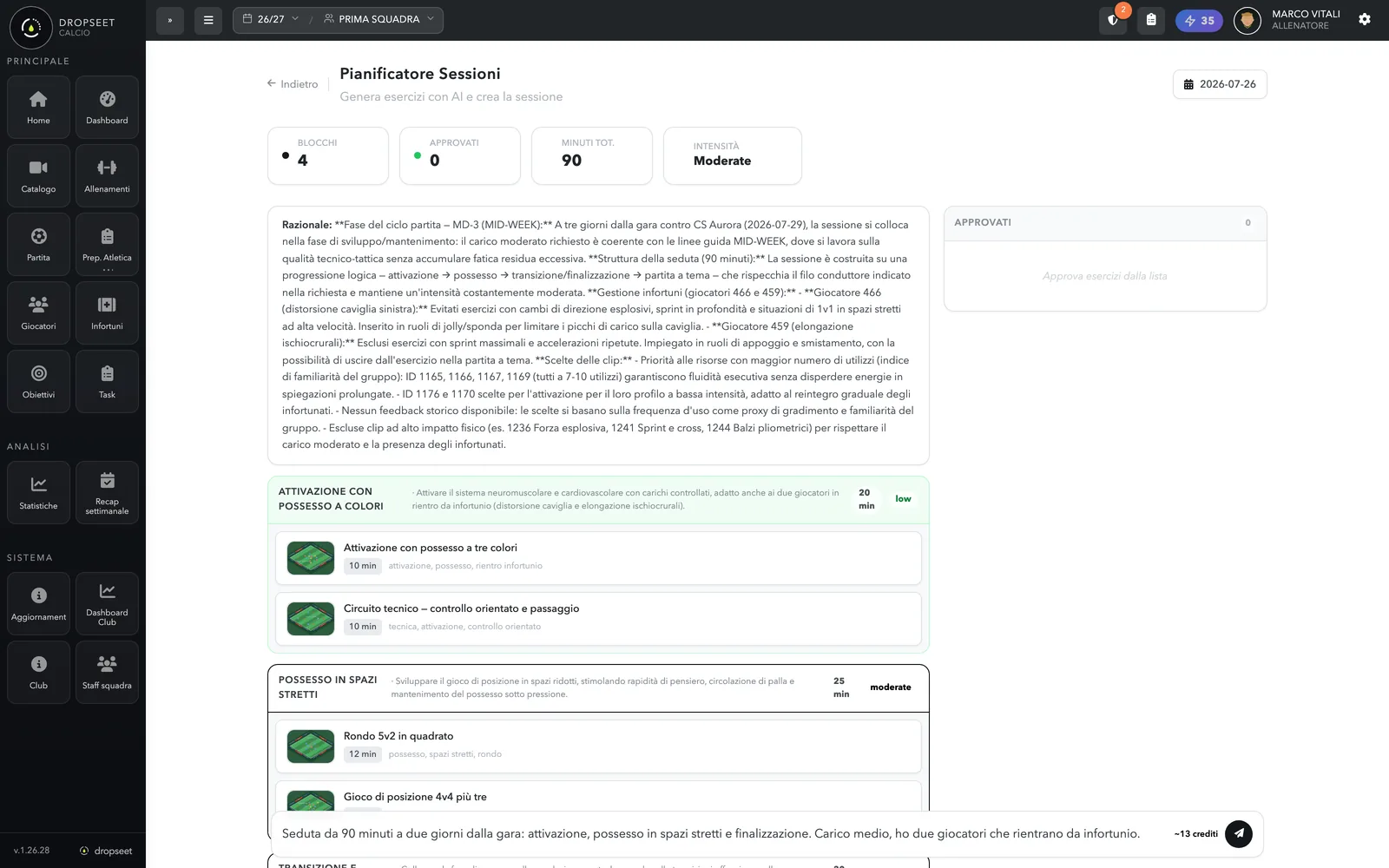
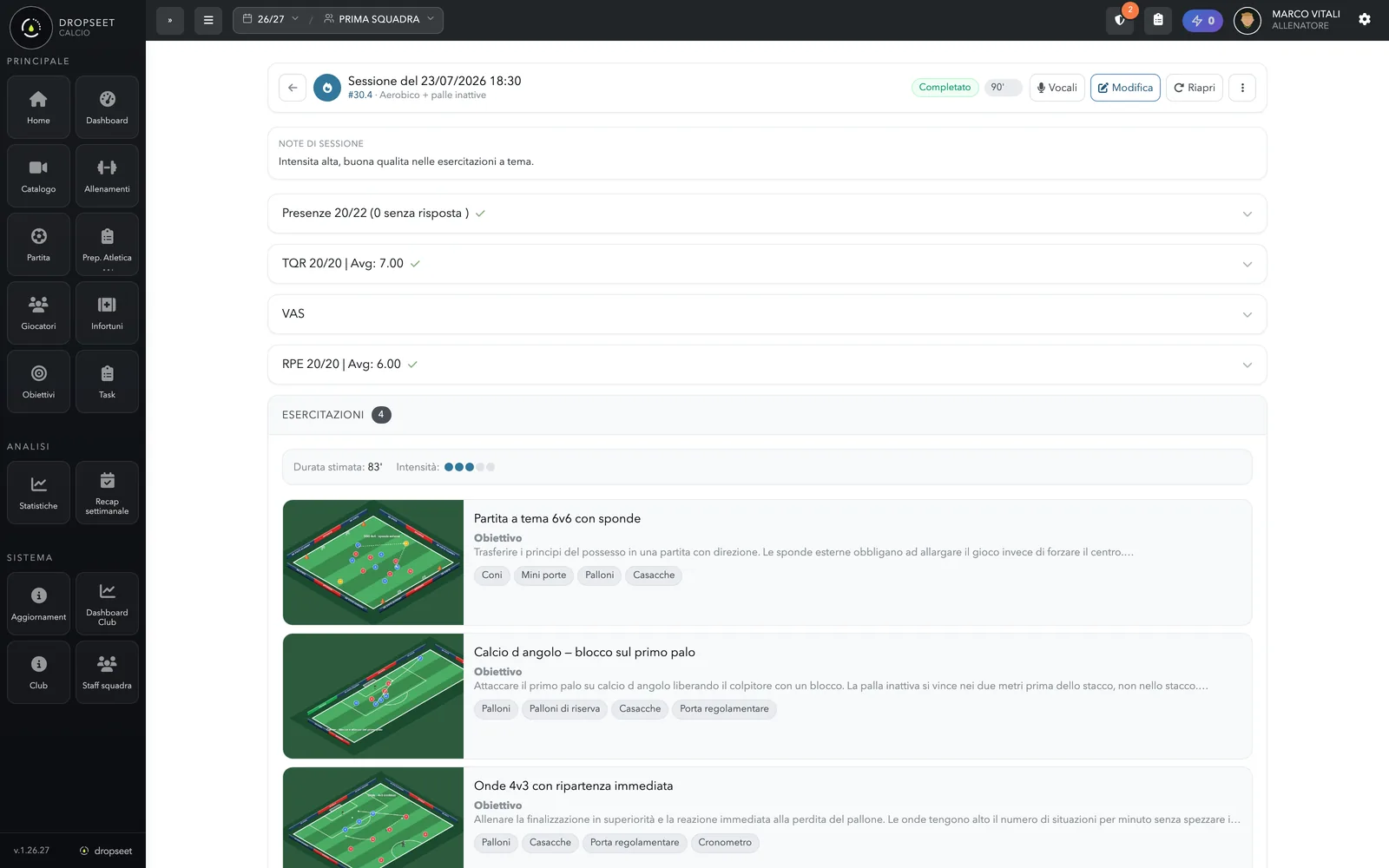
In dropseet you describe the session in words, for example “70-minute activation session on possession”, and the AI builds it from your club’s drills, split into blocks with duration and intensity. The catalog has more than 300 drills already drawn, filtered by age, phase of play and equipment. Players and parents answer “I’m in / I’m out” from the app, so you know in advance how many you can count on. The session exports to PDF to take to the pitch or send to the staff. Try it on a team already full of data in the demo.
Frequently asked questions
How long should a football training session be?
It depends on the day of the week and the age group. With senior teams 75–95 minutes midweek and 45–60 for the pre-match session; less with younger players, with more game time and fewer breaks.
How many drills should a session have?
Usually 3–5 on top of the warm-up. Fewer drills done well beat many changed constantly: every change costs minutes of explanation.
How do you plan a training week?
Start from the match and count the days backwards. The highest load far from the match, game principles midweek, a light activation the day before.
How do I adapt the session if players are missing?
Prepare a variant for smaller numbers: smaller pitches, jokers instead of missing players, drills in groups instead of teams.